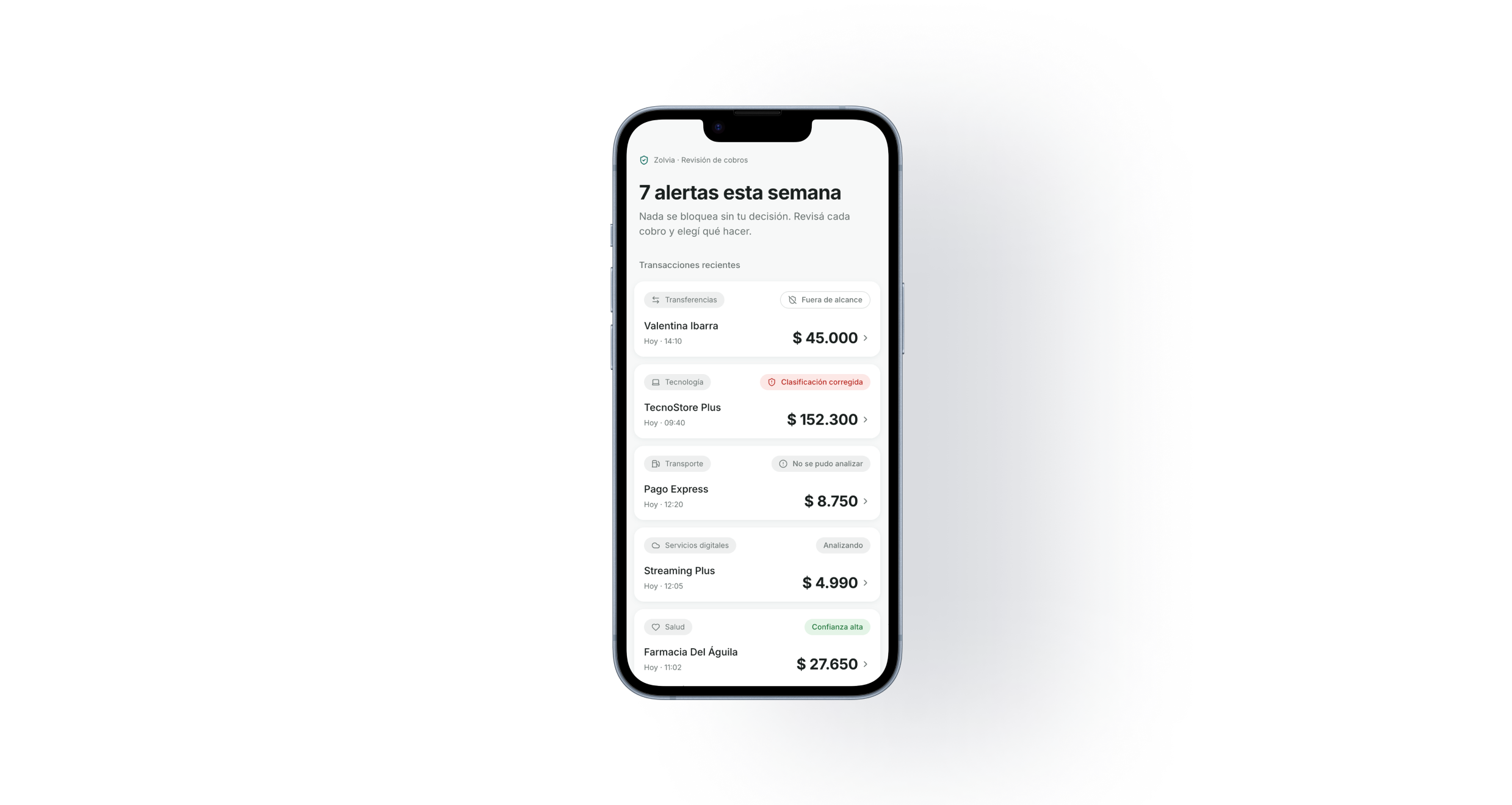
A fintech product exploring how to communicate automated risk decisions honestly — replacing a silent approve/block rule with an explicit, per-transaction confidence level the user can act on before the consequence lands.
Fintech apps that automatically flag suspicious transactions typically resolve the decision on their own — the purchase is approved or blocked — and the user finds out only after the consequence has already happened, with no moment to confirm or deny in between.
Users have no intermediate step to weigh in when a transaction looks off to the system, and legitimate purchases get blocked without context, pushing people to build their own manual workarounds because even their statement doesn't explain the decision.
Self-directed project (2026), inspired by domain experience at Mercado Pago, exploring how this experience would look today with AI tools and interaction patterns that didn't exist then — never using Mercado Pago's brand or real data. Led end-to-end: research, interaction model, design system, and a functional prototype.
See the full interaction flow (FigJam) ↗ · See the design system in Figma ↗
Tested the four failure states with three users across six structured tasks, logging both qualitative notes and quantitative metrics per person — not just whether something "felt clear."
A fully designed and implemented product — research, interaction model, design system, and all four AI failure states — running as a live, working prototype, not a set of mockups. Below is the actual app, not a screen recording.
This isn't a set of static screens — it's the actual product, built mobile-first and running live. Tap into any transaction to see how the confidence states behave.
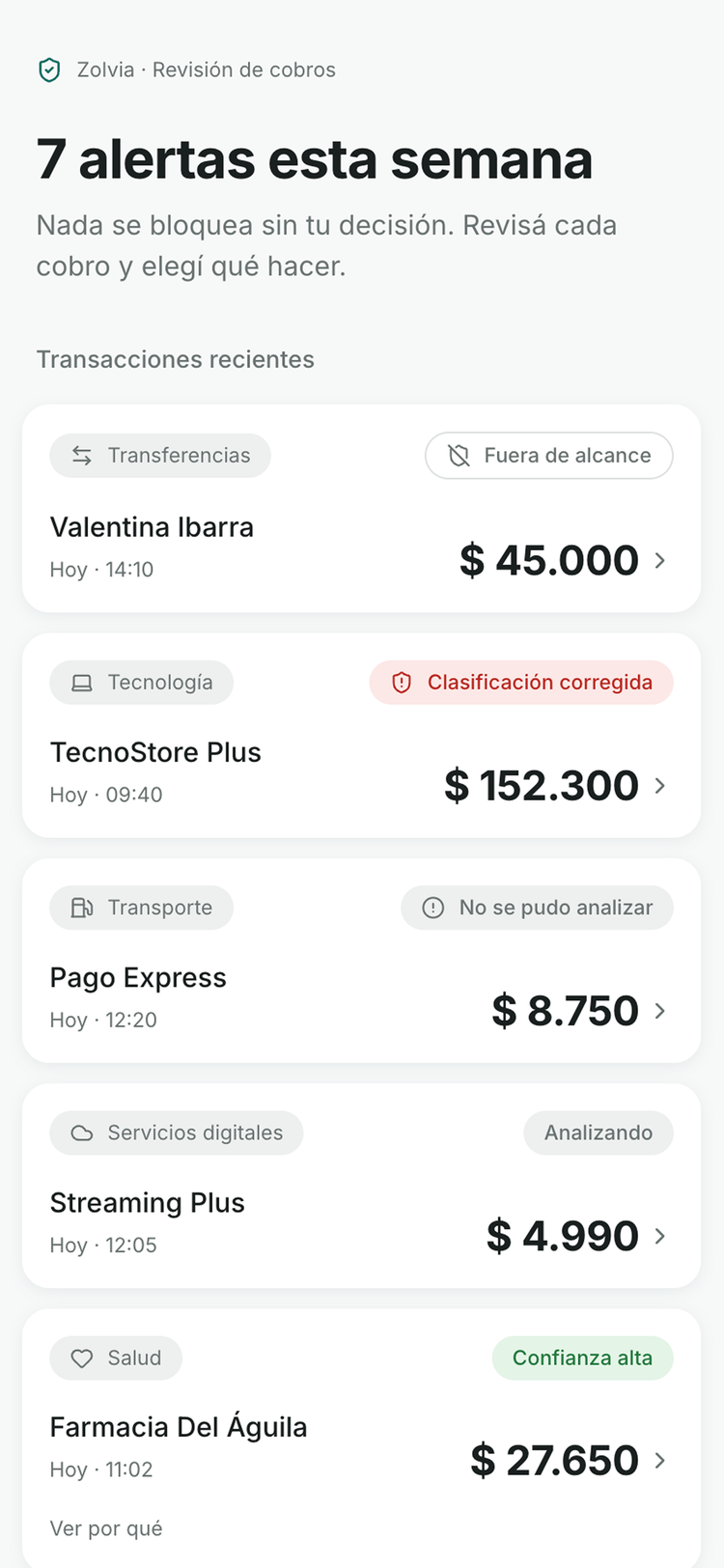
Prefer a full window? Open the live prototype in a new tab ↗ · Interaction flow (FigJam) ↗
michu.paulovsky@gmail.com ︱ +54 9 11 6965-5187
Copyright © Michelle Paulovsky